
How Architects Specify Wood Flooring: A Practical Checklist

A good floor starts on paper. Here is what a complete wood flooring spec should cover.
Planning a project? Talk with Joe Avila: call 908-232-6600 or book a virtual consultation.
Most wood floor problems on a job site trace back to something that was never written down. A clear specification tells the supplier, the installer and the finisher exactly what was designed, and leaves less room for substitutions and surprises. This checklist walks through the decisions an architect or designer should make before a wood floor goes out to bid.
Start with Species, Grade and Cut

The look of the floor comes from three choices that belong together. Species sets the color, hardness and grain, whether that is white oak, walnut or another wood. Grade sets how many knots, streaks and color changes are allowed, from a clean select grade to a livelier character grade. Cut sets the grain pattern: plainsawn shows cathedral grain, while rift and quartered gives a straighter, more linear look and better stability. Name all three in the spec, and ask for the supplier's written grading rules, because grade names are not the same from one manufacturer to the next.
Define Dimensions and Construction

Write down the board width, thickness and length range, or the exact piece size for a pattern floor. Then choose the construction. Solid boards are one piece of wood from top to bottom. Engineered boards have a real wood wear layer bonded to a stable core, and the thickness of that wear layer decides how many times the floor can be sanded in the future. Engineered construction is often the better choice over concrete slabs and radiant heat, and for wide planks. State the edge profile too, such as square edge or micro-bevel, since it changes how the finished floor reads.
Plan for Moisture and the Subfloor

Wood moves as it takes on and gives off moisture, so the spec should say how the job site and the wood will be checked before installation. That includes testing the moisture of the subfloor and the flooring, confirming the building is enclosed with heating or cooling running, and allowing the wood to adjust to normal living conditions where the product calls for it. Over concrete, call for slab moisture testing and the right vapor retarder. Note the flatness the subfloor must meet before the floor goes down, and who is responsible for correcting it.
Specifying floors for a client or your own home? Book a virtual consultation with Joe Avila.
Specify the Installation Method
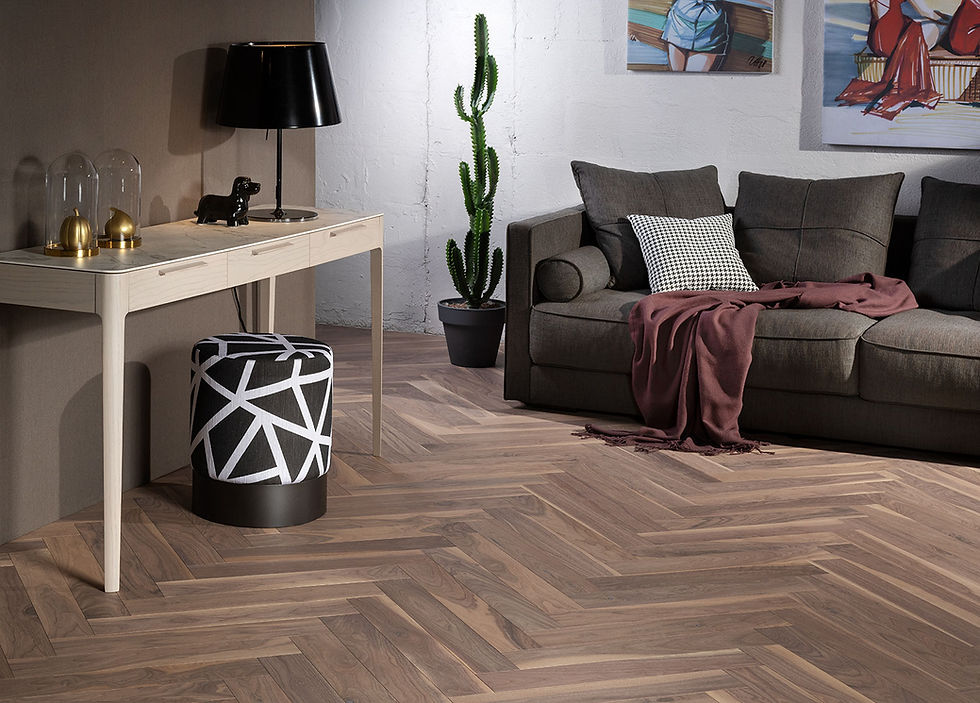
The method of installation affects stability, sound and cost, so do not leave it to the field. Nail-down suits solid wood over a wood subfloor. Glue-down is common over concrete and for many pattern floors. Floating installations suit some engineered products. Name the adhesive or fastener type the manufacturer requires, the expansion space at walls, and the layout: the direction of the boards, where a pattern starts, and how borders and transitions are handled. Referencing the NWFA installation guidelines and the manufacturer's instructions gives everyone the same rulebook.
Choose the Finish and Sheen

If the floor is site-finished, the spec should name the stain color, the finish type, the number of coats and the sheen. Finish types include waterborne polyurethane, oil-modified polyurethane and penetrating natural oils, each with its own look, upkeep and repair method. Sheen ranges from matte to gloss, and lower sheens hide everyday wear better. For prefinished floors, name the exact product and color. Either way, ask for a finished sample on the actual species and grade, approved in writing, so the color on site matches the color in the drawings.
Set Air Quality and Sustainability Goals

Many projects now have targets for indoor air quality and responsible sourcing. If yours does, put them in the spec rather than in a meeting note. You can set limits on volatile organic compounds for finishes and adhesives, ask for documentation on the wood's source, and prefer low and zero VOC finishes where they meet the performance the floor needs. Natural oil finishes and waterborne systems can help, but check that the product chosen still suits the traffic in each room. Written requirements make it easier to compare bids fairly.
Have a question about your own floor? Joe Avila can walk you through it.
Ask for Samples, Mockups and Attic Stock

Samples protect everyone. Ask for loose samples that show the full range of the grade, finished samples for color approval and, on larger jobs, a small mockup area installed and finished on site before the full floor goes in. Spell out how much extra material should be left with the owner as attic stock for future repairs, and ask for the maintenance instructions for the chosen finish to be handed over at the end of the job. These small steps prevent the most common disputes about color, grade and care.
Quick Answers
What should a wood flooring specification include?
Species, grade and cut, board size and construction, moisture and subfloor requirements, installation method, finish and sheen, air quality limits, samples and attic stock.
Should I specify solid or engineered wood flooring?
It depends on the subfloor and conditions. Engineered is often better over concrete, radiant heat and for wide planks, while solid suits a wood subfloor and can be sanded many times.
Why ask for a finished sample?
Stain and finish look different on each species and grade. A finished sample on the actual wood, approved in writing, keeps the site color matched to the design.
What is attic stock?
Extra flooring left with the owner after installation, so future repairs can use matching material from the same lot.
Talk to a Wood Flooring Specialist
Not sure which option fits your project? Call 908-232-6600 (Monday to Friday, 9 a.m. to 6 p.m. Eastern), visit our showroom at 406B West Broad Street in Westfield, New Jersey, or book a virtual consultation. We work with homeowners, architects and designers across New Jersey, New York City and the East Coast, and serve clients nationwide.
Call 908-232-6600, email joe@hugginsflooring.com or book a virtual consultation. Explore our sanding and finishing, eco-friendly finishes and floor care services.
About The Author
Joe Avila has 26 years in the wood flooring trade. He is an NWFA-certified wood flooring inspector, installer and sander, and for more than a decade he has taught accredited continuing-education programs for AIA, ASID and IDCEC audiences, training thousands of architects and design professionals in how to specify wood flooring correctly.


Comments