
Select vs. Character Grade Hardwood Flooring: How to Choose
Updated: 3 days ago

Same species, same boards, two very different floors: grade is about the look you want.
Planning a project? Talk with Joe Avila: call 908-232-6600 or book a virtual consultation.
Two floors can be made from the same species, milled to the same size and finished the same way, and still look completely different. The difference is grade. Grade tells you how much natural character shows in the boards, and it is one of the most important choices you make when you buy a wood floor.
What Flooring Grade Means

Grade describes how a board looks, not how strong it is or how well it was milled. Graders sort boards by visible features such as knots, mineral streaks, color variation, sapwood and small surface checks. Industry grading rules exist for common species such as oak, and many manufacturers add their own names on top, such as Select and Better, Character, Rustic or Natural. Because the names vary from one maker to the next, always ask what each grade allows and look at real boards before you decide. A select floor and a character floor can be equally well made and equally durable.
Select Grade: The Clean, Consistent Look
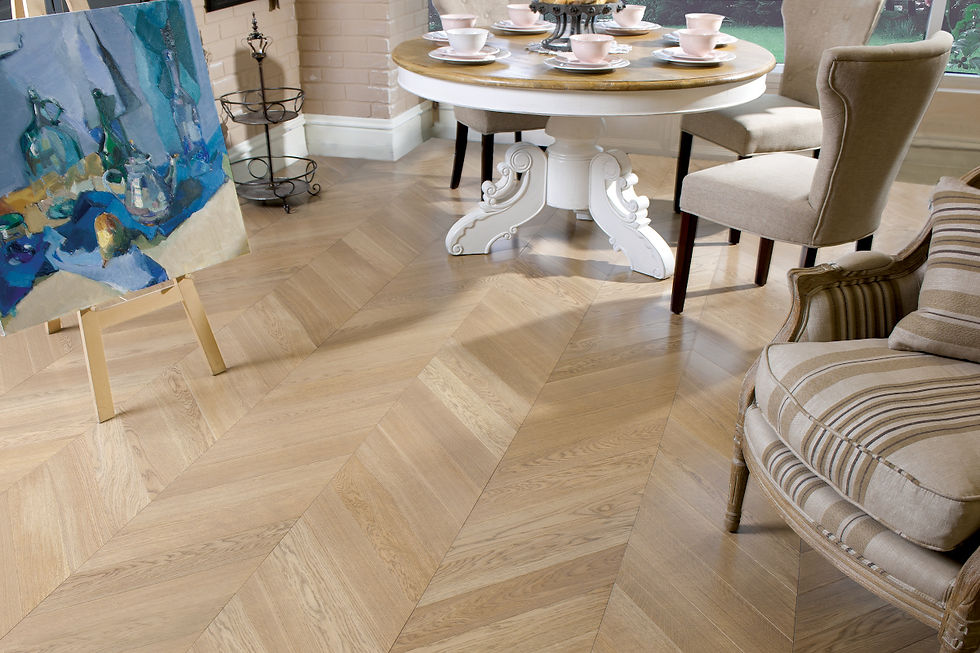
Select grade boards show few knots, and those that appear are small and tight. Color stays fairly even from board to board, so the floor reads as one calm surface. That makes select a natural fit for modern, minimal and formal rooms, and for floors where the grain itself is the feature, such as rift and quartered white oak. Many suppliers sell it as Select and Better, which means the bundle also includes the cleanest boards. Because fewer boards in each log qualify, select grade usually costs more than character grade in the same species and size.
Character Grade: Knots, Color and Life

Character grade boards keep more of the tree's story. You will see larger knots, mineral streaks, color shifts and more variation in grain. Some products fill larger knots so the surface stays smooth. The result is a warmer, more relaxed floor that suits farmhouse, rustic, traditional and many contemporary homes. Character grade is often chosen for wide plank floors, where long boards give the knots and color room to breathe. Since more of each log qualifies, character grade often costs less than select in the same species and size.
Specifying floors for a client or your own home? Book a virtual consultation with Joe Avila.
How Grade Affects Wear and Upkeep

Grade does not change how hard the wood is, but it does change how much everyday wear you notice. On a clean select floor, a scratch or dent has nothing to hide behind. On a character floor, knots, streaks and color variation help small marks blend in. That is one reason busy households, pet owners and families with young children often lean toward character grade. Whichever grade you choose, the finish still takes the daily wear, so felt pads, mats and regular cleaning matter just as much. See our guide to wood floors for homes with pets and kids for more ideas.
Grade, Stain and Finish

Knots and mineral streaks take stain differently from clear wood, so a stained character floor shows more contrast than a stained select floor. Some homeowners love that depth, while others prefer the even color select grade gives. Natural oil finishes tend to bring out the grain and character of the wood, while a flat, even stain can calm down a busy board. The best way to see the effect is to finish sample boards of your chosen grade with your chosen color, and look at them in your own light at different times of day before you decide.
Grade in Pattern and Wide Plank Floors

Pattern floors such as herringbone and chevron use short pieces laid at angles. In select grade, the pattern itself becomes the star, with crisp, even lines across the room. In character grade, knots and color add texture, which can feel more old world and lived in. Wide plank floors work well in both grades. Select wide planks look calm and tailored, while character wide planks feel relaxed and rustic. Think about how much movement you want in the room: a busy pattern plus busy boards can be a lot, while a simple layout can carry more character.
Have a question about your own floor? Joe Avila can walk you through it.
How to Choose the Right Grade

Start with the feeling you want in the room, then match the grade to it. Calm, tailored and modern spaces usually suit select. Warm, relaxed and rustic spaces usually suit character. Next, think about how the room is used: high-traffic rooms often benefit from character grade's ability to hide wear. Always look at a large sample or a finished floor, because one or two boards cannot show the full range a grade allows. Finally, order enough flooring from the same lot for the whole project, so color and character stay consistent across every room. Our guide to how much hardwood flooring to order can help with the numbers.
Quick Answers
What is the difference between select and character grade hardwood?
Select grade has few, small knots and even color. Character grade shows larger knots, mineral streaks and more color variation.
Is select grade hardwood stronger than character grade?
No. Grade describes appearance, not strength. A select floor and a character floor of the same species and construction wear the same way.
Which grade hides scratches better?
Character grade. Knots, streaks and color variation help small scratches and dents blend in, which is why it is popular with families and pet owners.
Does character grade cost less than select?
It often does, because more of each log qualifies for character grade. Prices depend on species, width, length and construction, so compare quotes for the same product.
Talk to a Wood Flooring Specialist
Not sure which option fits your project? Call 908-232-6600 (Monday to Friday, 9 a.m. to 6 p.m. Eastern), visit our showroom at 406B West Broad Street in Westfield, New Jersey, or book a virtual consultation. We work with homeowners, architects and designers across New Jersey, New York City and the East Coast, and serve clients nationwide.
Call 908-232-6600, email joe@hugginsflooring.com or book a virtual consultation. Explore our sanding and finishing, eco-friendly finishes and floor care services.
About The Author
Joe Avila has 26 years in the wood flooring trade. He is an NWFA-certified wood flooring inspector, installer and sander, and for more than a decade he has taught accredited continuing-education programs for AIA, ASID and IDCEC audiences, training thousands of architects and design professionals in how to specify wood flooring correctly.


Comments