
European Oak vs. American White Oak Flooring: How to Choose

Both are oak, but they come from different forests and can look different on the floor. Here is how to compare them.
Planning a project? Talk with Joe Avila: call 908-232-6600 or book a virtual consultation.
When homeowners and designers shop for oak flooring today, they often find two names side by side: European oak and American white oak. Both make beautiful, durable floors, and both are used in high-end homes on both sides of the Atlantic. This guide explains how they differ and what to look at when you compare samples.
Two Oaks from Two Continents

European oak comes mainly from two species, Quercus robur and Quercus petraea, grown in forests across Europe. American white oak is mostly Quercus alba and related species from the eastern United States. They belong to the same family and share many traits, including a closed grain and the natural tannins that let oak react to fuming and smoking. The differences come from the trees themselves, the growing conditions, and how each region's mills tend to cut, grade and build their flooring.
Color and Tone
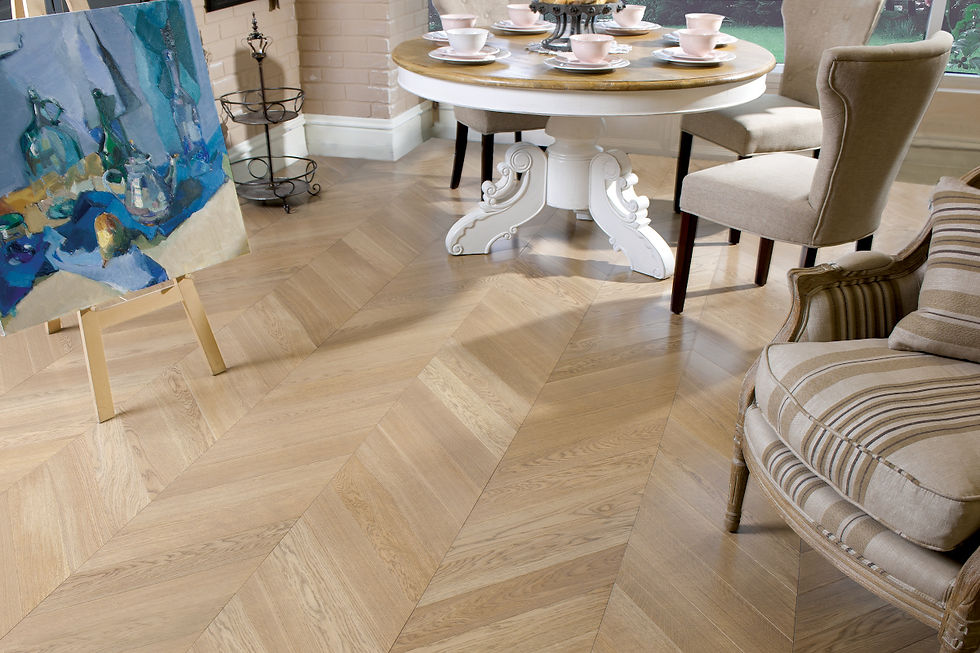
Raw oak color varies from forest to forest and even board to board, so samples matter more than labels. European oak is often described as having a warm, even, golden-tan tone. American white oak ranges from light tan to warmer browns and can show more variation from board to board. Both darken and warm a little with light and age. Once a stain, oil or tinted finish is applied, the difference can narrow a lot, so compare finished samples in the color you actually plan to use.
Grain and Character

Both oaks show the classic oak grain, from cathedral patterns in plainsawn boards to the straight lines and ray fleck of rift and quartered cuts. Many European oak floors are sold in rustic and character grades with knots, cracks and filled splits as part of the look. American white oak is offered in a full range too, from clean select to character. Because grading rules differ by country and by manufacturer, always ask for the written grade description and look at a full box, not one perfect board.
Specifying floors for a client or your own home? Book a virtual consultation with Joe Avila.
Hardness and Durability

European oak and American white oak are close in hardness, and both are well suited to busy homes, kitchens and hallways. Day to day, the finish and the way the floor is cared for affect wear more than the small difference between the two species. A durable finish, felt pads under furniture and mats at entry doors will do more to protect either floor than the choice of continent. Both can be sanded and refinished, as long as the wear layer or solid board is thick enough.
Plank Size and Construction

Plank size is often where the two differ most in practice. Many European oak products are made as engineered boards in wide widths and long lengths, which suits open-plan rooms and modern designs. American white oak is widely available as solid strip and plank flooring, and in engineered and wide plank formats as well. Both are made into herringbone, chevron and other pattern pieces. Compare the wear layer thickness, the core, the board size and the edge profile, not just the species name.
Finishing and Color Options

Both oaks take stain, oil and waterborne finishes well, and both can be fumed, smoked or wire-brushed for texture. Many European oak floors are sold prefinished with hardwax oils and soft, natural looks. American white oak is often installed raw and finished on site, which allows full control over color and sheen after installation. Either way, ask for a sample finished with the exact product you plan to use, because the same stain can look different on different lots of the same species.
Have a question about your own floor? Joe Avila can walk you through it.
Sourcing and Making the Choice

Both European oak and American white oak can come from responsibly managed forests. If sourcing matters to you, ask the supplier for documentation such as FSC or PEFC certification for the specific product. In the end, the best choice depends on the look you want, the plank size and construction your rooms need, the finish, and how the floor will be installed. Look at large samples side by side in your own light before you decide.
Quick Answers
What is the difference between European oak and American white oak?
They are related oak species from different continents. European oak often has a warm, even tone and is common in wide engineered planks, while American white oak ranges more in color and is widely sold as solid and engineered flooring.
Is European oak harder than American white oak?
They are close in hardness, and both suit busy homes. The finish and daily care affect wear more than the small difference between the two species.
Can both oaks be stained or fumed?
Yes. Both have natural tannins and a closed grain, so they take stain, oil and waterborne finishes well and can be fumed or smoked for deeper tones.
Which oak is better for wide plank floors?
Both can be made into wide planks. Many European oak products come as wide engineered boards, and American white oak is also available in engineered wide plank formats.
Talk to a Wood Flooring Specialist
Not sure which option fits your project? Call 908-232-6600 (Monday to Friday, 9 a.m. to 6 p.m. Eastern), visit our showroom at 406B West Broad Street in Westfield, New Jersey, or book a virtual consultation. We work with homeowners, architects and designers across New Jersey, New York City and the East Coast, and serve clients nationwide.
Call 908-232-6600, email joe@hugginsflooring.com or book a virtual consultation. Explore our sanding and finishing, eco-friendly finishes and floor care services.
About The Author
Joe Avila has 26 years in the wood flooring trade. He is an NWFA-certified wood flooring inspector, installer and sander, and for more than a decade he has taught accredited continuing-education programs for AIA, ASID and IDCEC audiences, training thousands of architects and design professionals in how to specify wood flooring correctly.


Comments